Inside HyperAPI Hackathon 2.0: Pushing Financial Document AI to Its Limits
If the first HyperAPI hackathon was about testing boundaries, Hackathon 2.0 was about pushing them further, with more people, more pressure, and far more ambitious builds.
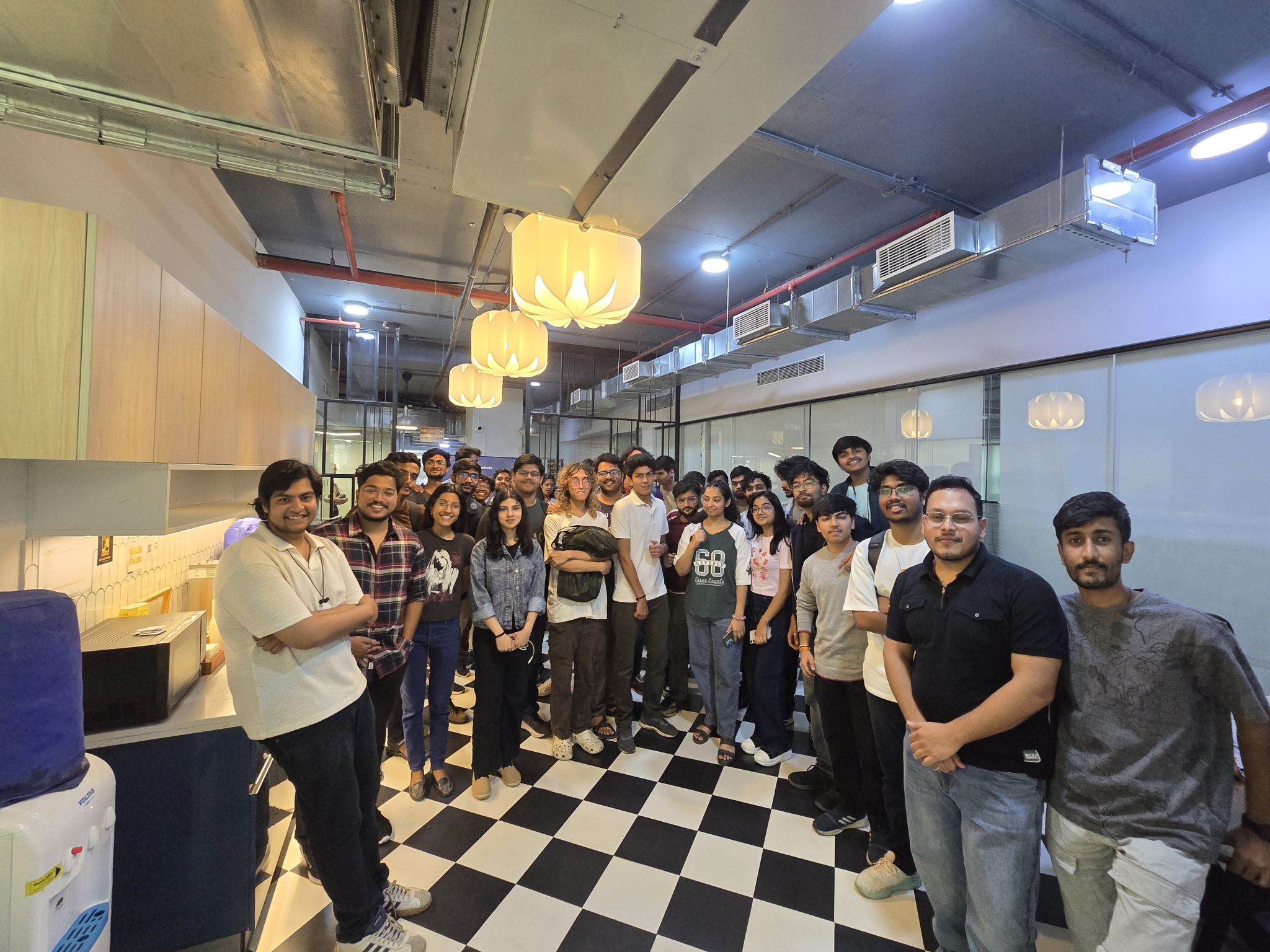
Held on March 14 at the Hyperbots office in Whitefield, the room felt different the moment you walked in. Bigger crowd, sharper intent, and a clear sense that participants knew what they were here for.
Over 100+ developers, builders, and fintech problem-solvers showed up, laptops open, ready to take on some of the hardest document intelligence challenges in finance.
A Room That Didn’t Slow Down
From the first hour, the pace was relentless.
People weren’t waiting around to understand the problem. They were already:
Testing edge cases
Feeding messy documents into pipelines
Comparing outputs
Debugging failures in real time
You could hear the same patterns repeating across the room:
“Why is this not reconciling?”
“This field is getting picked up incorrectly…”
“Wait, this structure changes mid-document…”
It wasn’t just coding. It was problem-solving under pressure.
The Financial Gauntlet: Where Things Got Real
Track 1 brought back the same core challenge, but this time with even tougher datasets.
Participants were given documents that:
Break traditional OCR systems
Have inconsistent formats
Contain hidden intent signals
Require precise mathematical validation
The goal stayed uncompromising:
👉 Zero hallucinations
👉 100% verifiable outputs
And that’s where the real work happened.
Teams kept iterating, adjusting pipelines, rethinking assumptions, trying to move from “almost correct” to “fully reliable.”
BYOD: Where It Got Personal
Track 2 had a different kind of energy.
Participants brought their own documents, the messy, real-world files they deal with every day.
Invoices that don’t follow structure
Tax documents with unpredictable formats
Claims that mix text, tables, and edge cases
This wasn’t theoretical anymore.
👉 It became: “Can this actually work on my data?”
Some participants tried to break HyperAPI. Others tried to make it work at all costs.
Both led to some of the most interesting moments of the day.
The Competition and the Wins
With stronger participation came even stronger outcomes.
The competition concluded with multiple winning teams being recognized for pushing the limits of both accuracy and robustness under real-world OCR challenges. Along with cash prizes, participants also received goodies, certificates, and exclusive recognition for their work.
What stood out most wasn’t just the final rankings, but how many teams came remarkably close to solving highly complex document understanding problems with creative and practical approaches.
What Changed From Hackathon 1.0
Hackathon 2.0 wasn’t just bigger, it was sharper.
More participants (100+)
Better-prepared teams
Faster iteration cycles
Deeper focus on real-world applicability
There was less exploration, more execution.
People came in with intent.
What This Event Really Showed
By the end of the day, one thing was clear:
👉 Financial document processing is still one of the hardest problems in AI
👉 But the gap between “possible” and “production-ready” is getting smaller
When builders are given real tools and real data, the conversation shifts quickly from:
“Can this work?”
to
“How far can we push this?”
Closing
A huge thank you to everyone who showed up, built, tested, broke things, fixed them, and pushed HyperAPI further than expected.
Hackathon 2.0 wasn’t just an event. It was a signal, of where finance AI is headed, and how fast it’s moving.
And if this round was any indication, the next one is going to be even more interesting.


