Hyperbots and Liv Data LLC Host New York Finance Leaders Connect: From AI Insight to Autonomous Action

The Ink 48 Hotel in New York recently welcomed more than 20 CFOs and senior finance leaders for the New York Finance Leaders Connect, hosted by Hyperbots and Liv Data LLC.
With the main focus on “AI in Finance: From Insight to Autonomous Action,” the event brought finance executives together for an evening of practical insights, meaningful networking, and candid discussions about the opportunities and challenges surrounding enterprise AI adoption.
The evening began with thought-provoking sessions from John Silverstein, Founder and CEO of Liv Data LLC, and Rajeev Pathak, CEO and Co-founder of Hyperbots Inc. However, what made the event especially memorable was the exchange of questions, perspectives, and real-world experiences before, during, and after the presentations.
The Future Finance Organization: Moving Work Up the Value Chain
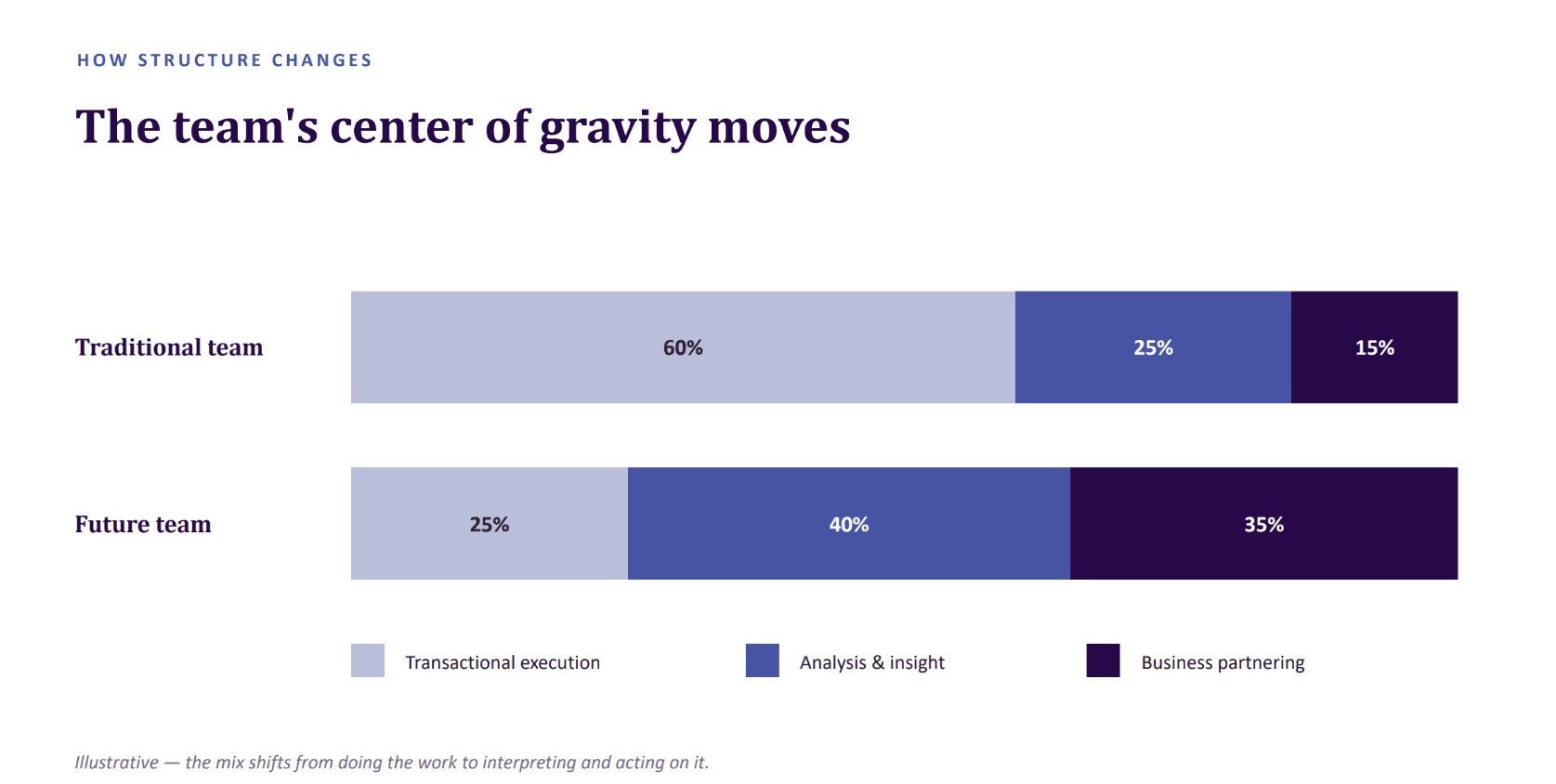
John Silverstein opened the discussion by examining how AI is reshaping the structure and responsibilities of modern finance organizations.
As AI agents begin handling more routine, repetitive, and transaction-intensive work, finance professionals have an opportunity to shift their attention toward analysis, business partnership, and strategic decision-making. Rather than spending their expertise on processing transactions and compiling information, finance teams can focus on interpreting financial data, advising business leaders, and improving organizational performance.
John also emphasized that successful AI transformation requires more than deploying new technology. Organizations need a strong operational foundation built on clean data, integrated systems, well-defined processes, and reliable financial controls.
Without these fundamentals, even highly capable AI systems may struggle to produce dependable outcomes. Finance leaders must therefore consider data readiness, system connectivity, governance, and workforce development as essential parts of their AI strategy.
A Practical Roadmap for Agentic AI in Finance
Rajeev Pathak followed with a practical roadmap for adopting Agentic AI across Finance and Accounting.
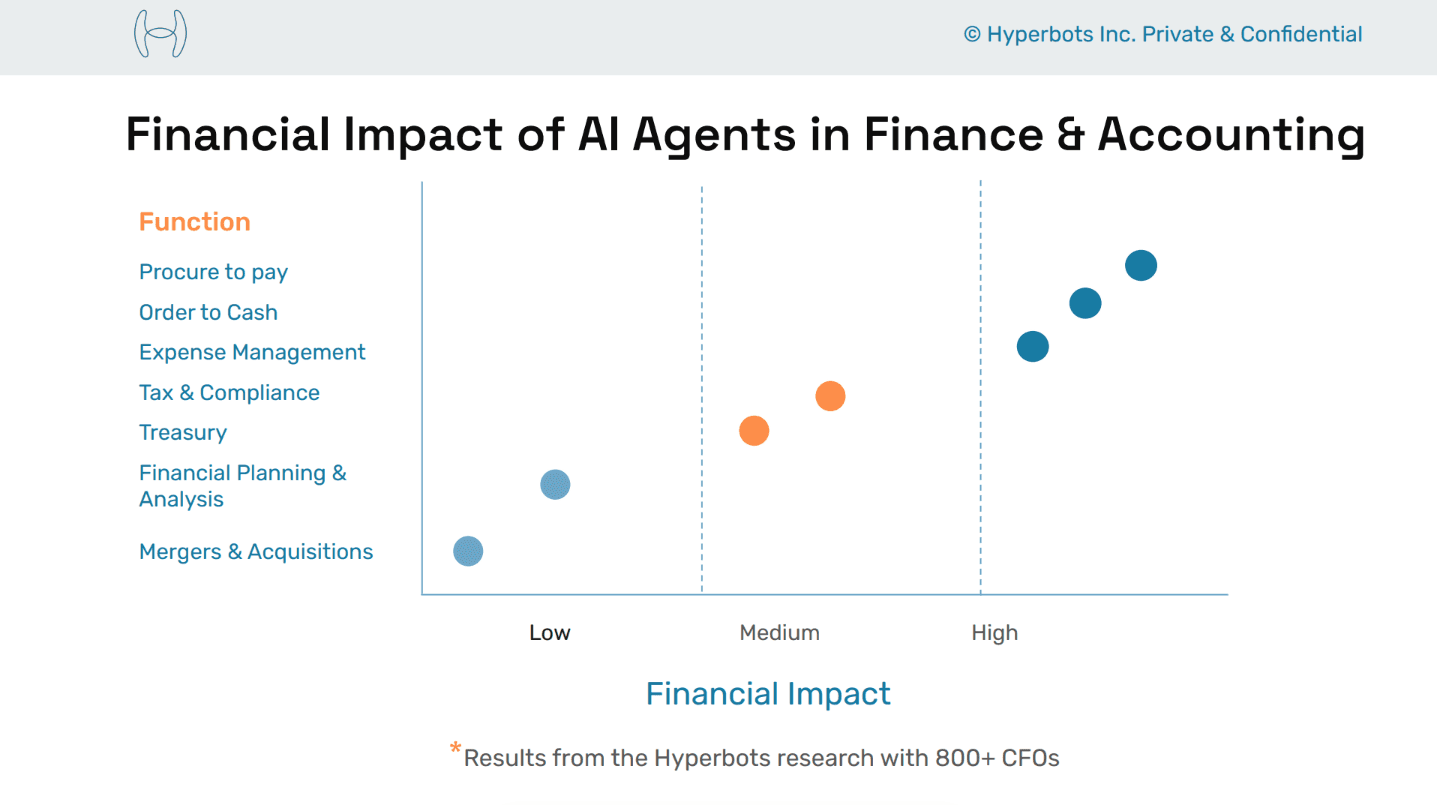
Drawing on insights gathered from conversations with more than 800 CFOs, Rajeev explained why organizations should avoid attempting an enterprise-wide AI transformation all at once. Instead, finance leaders should begin with targeted, high-volume workflows where inefficiencies are measurable and the potential business impact is clear.
Functions such as Procure-to-Pay (P2P) and Order-to-Cash (O2C) provide strong starting points because they involve significant transaction volumes, repetitive processes, manual coordination, and identifiable performance metrics.
Once organizations have successfully implemented AI within these operational workflows, they can apply the experience, governance frameworks, and technical foundations they have developed to more strategic areas of finance.
Rajeev also made it clear that not every AI initiative will produce positive returns. Finance leaders should evaluate each use case based on its expected impact, implementation requirements, operational risks, and ability to generate measurable value.
The most effective approach is to start with focused initiatives, measure the outcomes, and scale adoption where the value has been proven.
When Every Company Uses AI, Where Will the Advantage Come From?
Some of the evening’s most valuable insights emerged from questions raised by the finance leaders in attendance.
Patrick Goff, former CFO at Avantus, posed one of the evening’s most thought-provoking questions: Once every company becomes AI-enabled, does the competitive advantage eventually disappear?

The discussion highlighted that the greatest advantage will belong to organizations that begin building their AI capabilities early.
Over the next one to ten years, early adopters will develop operational experience, institutional knowledge, integrated data foundations, and redesigned workflows that competitors may find difficult to replicate quickly. While AI technology itself may become widely available, the organizational ability to apply it effectively will take much longer to build.
The competitive advantage will therefore come not simply from having access to AI, but from knowing where to use it, how to govern it, and how to integrate it into day-to-day business operations.
What Happens to People When AI Delivers ROI?
Ashraf Gad, CIO and Acting CISO at Stone Capital Partners, raised another important question: When AI produces measurable ROI by automating existing work, what happens to the people currently performing that work?

The discussion reinforced that the answer often depends on the size, structure, and operating model of the organization.
Large enterprises may require formal workforce transformation and redeployment programs because roles and responsibilities are distributed across larger teams. Mid-market organizations may have greater flexibility to move employees into strategic, analytical, and higher-value work.
In both cases, successful adoption requires more than introducing AI agents. Organizations must rethink how work is assigned, identify the capabilities employees will need, and create opportunities for finance professionals to contribute at a higher level.
The objective is not simply to complete existing work with fewer resources. It is to build a finance organization capable of providing better insight, stronger business partnership, and faster decision support.
Applying AI Across Specialized Industries
The conversations also demonstrated how Agentic AI can support organizations operating in highly specialized industries.

Alice Czajkowski, CFO at UOVO, spoke with Rajeev about the operational complexities of logistics, supply chain, and storage businesses. Their discussion explored how AI could be applied to Finance and Accounting workflows even in industries with highly specialized processes, customer relationships, and operational requirements.
The conversation served as an important reminder that effective finance AI cannot rely on generic automation alone. It must understand the financial context, business rules, supporting documentation, and operational systems behind each transaction.
By applying AI within this context, specialized organizations can improve financial visibility, reduce repetitive work, and help finance teams manage increasingly complex operations without losing control or oversight.
Expanding AI Across Transaction and Wealth Advisory
Neal Siena and Jak Cukaj, Private Wealth Advisors at Raymond James, contributed perspectives on the potential role of AI across transaction advisory and wealth advisory services for mid-market clients.
Advisory workflows frequently require professionals to gather information from multiple sources, review extensive documentation, identify relevant financial details, and communicate insights to clients. AI has the potential to simplify many of these processes by organizing information, supporting analysis, and reducing the administrative work surrounding advisory engagements.
This can allow advisors to spend more time understanding client needs, evaluating financial implications, and providing informed guidance.
Their perspectives illustrated that the value of AI extends beyond transactional Finance and Accounting processes. When applied thoughtfully, AI can also support knowledge-intensive professional services where judgment, trust, and client relationships remain essential.
Beyond the Presentations: The Conversations That Matter
While the presentations provided a foundation for the evening, the most valuable part of the New York Finance Leaders Connect was the conversation among the finance executives themselves.
Attendees discussed the realities of AI adoption, including data readiness, organizational change, workforce impact, governance, implementation priorities, and the challenge of demonstrating measurable ROI.
These exchanges reinforced that finance leaders are no longer debating whether AI will influence their organizations. The more important questions now concern where to begin, which processes to prioritize, how to prepare teams, and how to scale responsibly.
The event also demonstrated the value of bringing finance, technology, security, operations, and advisory leaders into the same conversation. Successful AI transformation will require collaboration across each of these functions.
Hyperbots and Liv Data LLC extend their sincere thanks to every CFO and senior finance leader who joined the event and contributed their perspectives. Progress happens when leaders come together to share experiences, ask difficult questions, and learn from one another.
The conversation continues at upcoming Finance Leaders Connect events all over America.
Want to be part of the next Finance Leaders Connect? Browse upcoming events and reserve your spot to connect with finance leaders exploring the future of AI in Finance and Accounting.