Insight Summits Charlotte CFO Dinner: Talking Finance AI ROI With CFOs
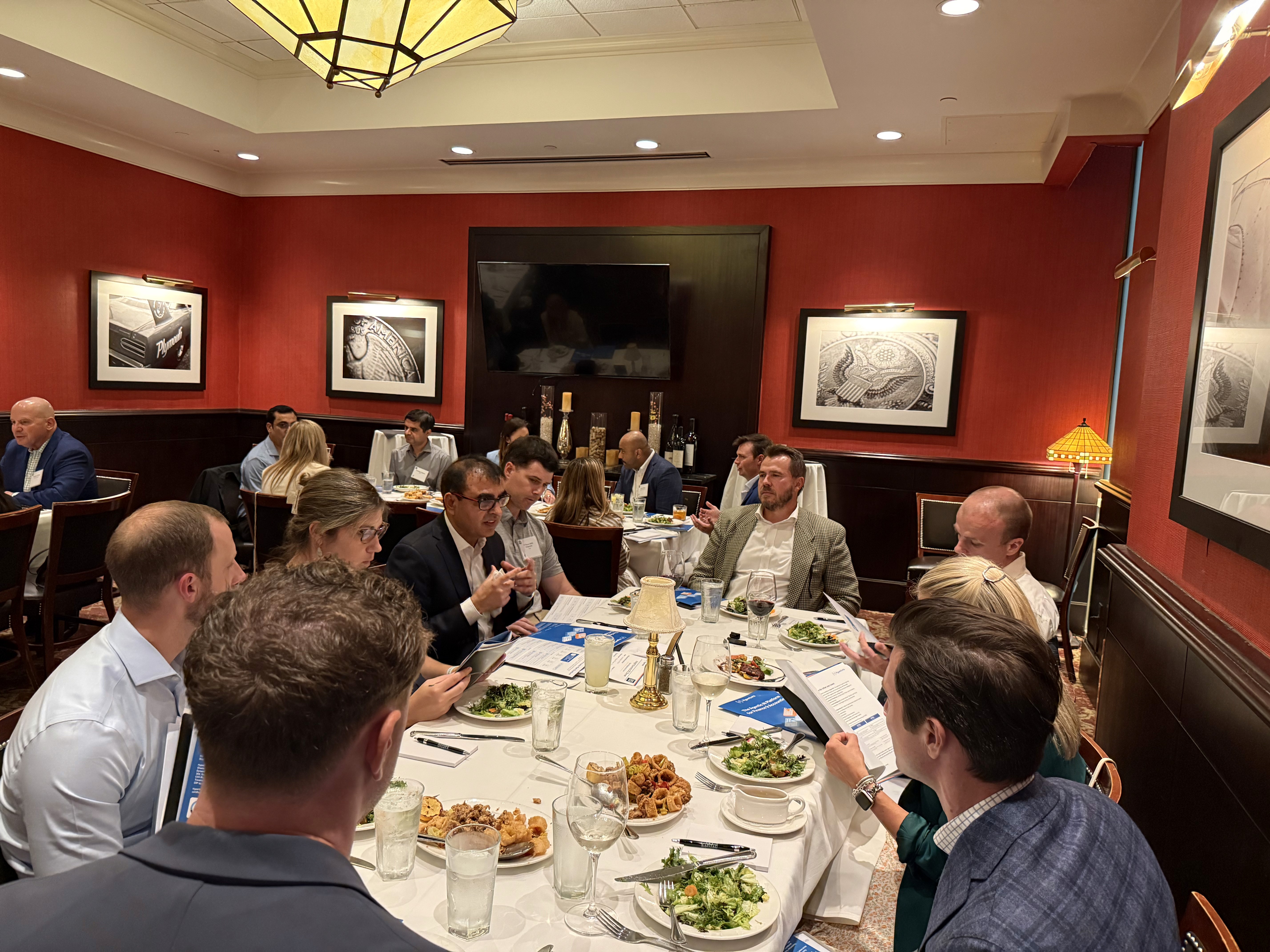
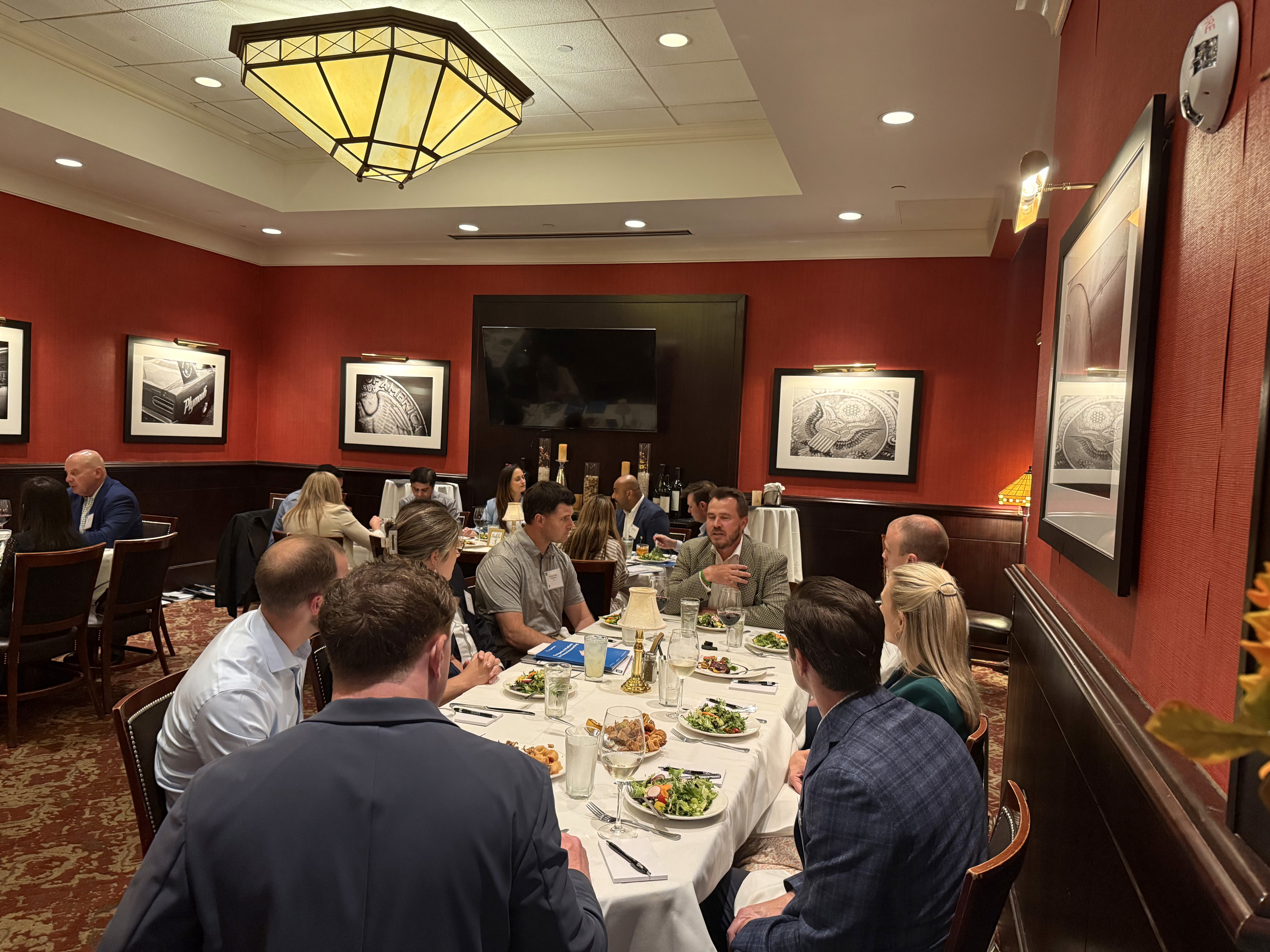
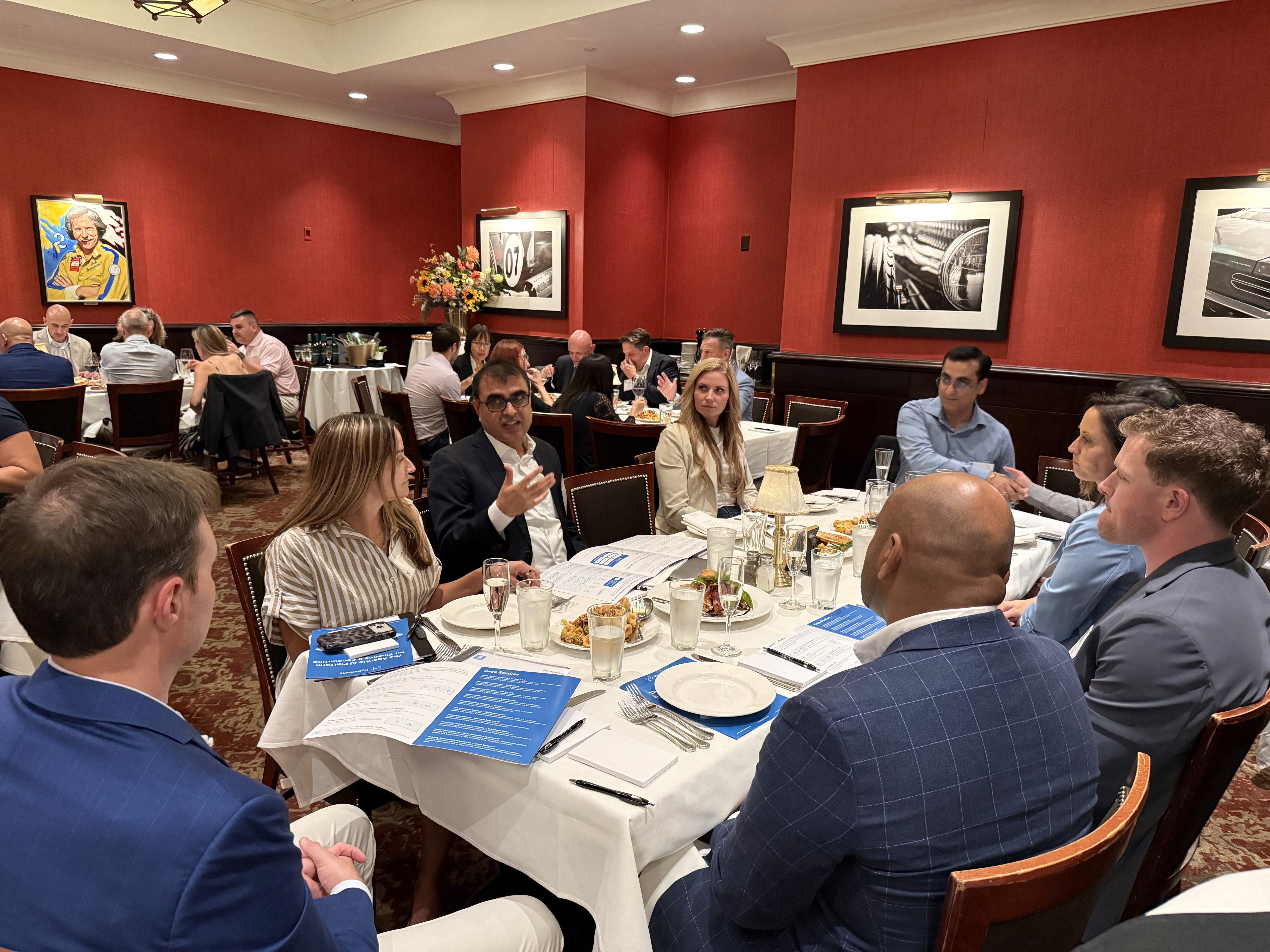
Team Hyperbots recently had the pleasure of sponsoring and joining the Insight Summits CFO Dinner in Charlotte, an evening spent with an outstanding group of CFOs and finance leaders. Dinners like this tend to surface what's genuinely on finance leaders' minds, and this one was no exception.
The Real Conversation Wasn't About AI
Here's what stood out: almost nobody at the table wanted to talk about AI itself. What they wanted to talk about was outcomes and ROI. It's a major shift. Finance leaders have moved past the novelty of AI and are now asking sharper, more practical questions: Where does this actually save time? Where does it reduce risk? What does the business case look like? That shift set the tone for three conversations in particular that dominated the evening.
Invoice Processing: From "Can It Work?" to "How Do We Apply This?"
One of the most engaged discussions centered on AI agents for invoice processing. We shared a real example: a multi-entity US and European media company using Hyperbots' AP Invoice Processing agent to process 1 million invoices annually, achieving 99.8% extraction accuracy, 80% straight-through processing, and a 60% reduction in invoice processing costs.
The moment those numbers landed, the tone of the conversation changed. It stopped being a question of whether AI could handle invoice processing reliably, and became a question of how to apply the same approach internally. Leaders wanted to know how accuracy and cost numbers are from real, multi-entity, high-volume environments.
What made the example land wasn't just the headline metrics, it was walking through how the agent actually gets there. Invoices are discovered automatically from email, drives, and portals, with irrelevant documents filtered out before they ever reach the processing pipeline. From there, foundational AI agents handle field extraction, validation, 2-way and 3-way matching against POs and GRNs across more than 140 fields, GL coding, and GL posting, all chained together so a raw invoice can turn into a posted general ledger entry in under a minute, down from an industry average of around 11 days. Several finance leaders specifically asked how that kind of speed holds up on messy, real-world documents, and the answer is pre-training: the extraction models are trained on 35M+ invoice fields, which is what allows the system to handle multi-page invoices with hundreds of line items, or a single document containing multiple invoices, without manual pre-processing.
The other question that came up more than once was what happens when something doesn't match cleanly. Rather than stalling the whole process, exceptions get routed to the right person with a clear, specific explanation of the mismatch, so the humans still in the loop are making fast, informed decisions instead of digging through source documents themselves. That combination, high straight-through processing plus transparent exception handling, was what ultimately reframed the conversation from "is this reliable" to "how would this fit into our environment."
HyperAPIs: Building Custom Finance Agents, Not Just Buying Point Solutions

While our finance and accounting AI co-pilots generated plenty of interest on their own, it was HyperAPIs that sparked some of the most engaging conversations of the night. For many finance leaders, this was a new way of thinking about AI adoption entirely.
Rather than treating AI as a single off-the-shelf tool, HyperAPIs lets finance teams build their own custom AI agents using 200+ pre-built finance and accounting APIs, spanning master data, transactions, documents, workflows, analytics, and integrations. Teams can compose FP&A agents, tax and audit agents, finance ops agents, or industry-specific agents, and orchestrate and deploy them directly into existing ERP and enterprise systems like SAP, Oracle, NetSuite, Microsoft, Coupa, and many more. Since Hyperbots provide pre-built connectors, integration is fast and smooth.
For finance leaders who already have unique processes and don't want to force-fit a generic tool, that flexibility was the appeal. It reframes the AI conversation from "which vendor do we buy" to "what can we build," backed by proprietary small language models and vision language models purpose-built for finance data.
What made the conversation stick wasn't just the API count; it was how straightforward the path from idea to deployed agent actually is. A team identifies a use case, composes it using the relevant HyperAPIs across categories, builds and orchestrates the logic, then deploys and integrates it directly into existing ERP and enterprise systems, from there monitoring performance and refining it over time. Underneath that workflow sits the full Hyperbots platform: workflow orchestration, a RAG and memory layer, the proprietary AI/ML models, and built-in security, governance, and monitoring, so teams aren't stitching together the agent but also the infrastructure alongside.
A Private Chatbot for the CFO's Own Questions
The third conversation that generated real curiosity was around HyperLM, our natural-language financial chatbot built for CFOs. The idea of securely connecting finance data into a single AI workspace and simply asking questions resonated immediately: "Forecast cash flow for the next 13 weeks." "Explain budget versus actuals by entity and cost center." "Prepare monthly close report with citations."
That last point, citations, mattered more than expected. Finance leaders don't just want an answer; they want to trace it back to the source. HyperLM is built around that expectation, whether it's pulling data and answers from contracts, invoices, and reports the moment they're uploaded, explaining budget-vs-actual swings across periods, entities, and cost centers, or auto-drafting monthly close packs and flux commentary with citations attached. The same workspace handles board reporting, assembling narratives and metrics that trace back to source systems, along with cash-flow forecasting from live AR, AP, payroll, and treasury positions, and driver-based revenue forecasting across products, geographies, and segments.
The benefits landed clearly at the table: time to query and consolidate data drops from hours to under a minute, natural-language querying cuts dependence on analytics and reporting teams by up to 80%, and daily automated briefs mean a CFO or finance leader can start the morning with a current, commentary-rich snapshot rather than waiting on a report. What used to take several separate steps, pulling data, reconciling it, building reports: is collapsed into a single query now
Several finance leaders asked to see it firsthand after hearing just a few example queries, which is usually the best sign that a conversation has moved from interesting to relevant.
Looking Ahead
A big thank you to the Insight Summits team for bringing together such an engaged community of finance leaders in Charlotte. Conversations like these are a reminder that the AI conversation in finance has matured. Leaders aren't asking if AI belongs in the finance function anymore; they're asking how to deploy it in a way that fits their systems, their teams, and their outcomes.
We enjoyed every conversation at the table and look forward to many more!
Follow us to know more about our future events.