Inside Hyperbots’ Washington D.C. Finance Leaders Connect: From Insight to Autonomous Action
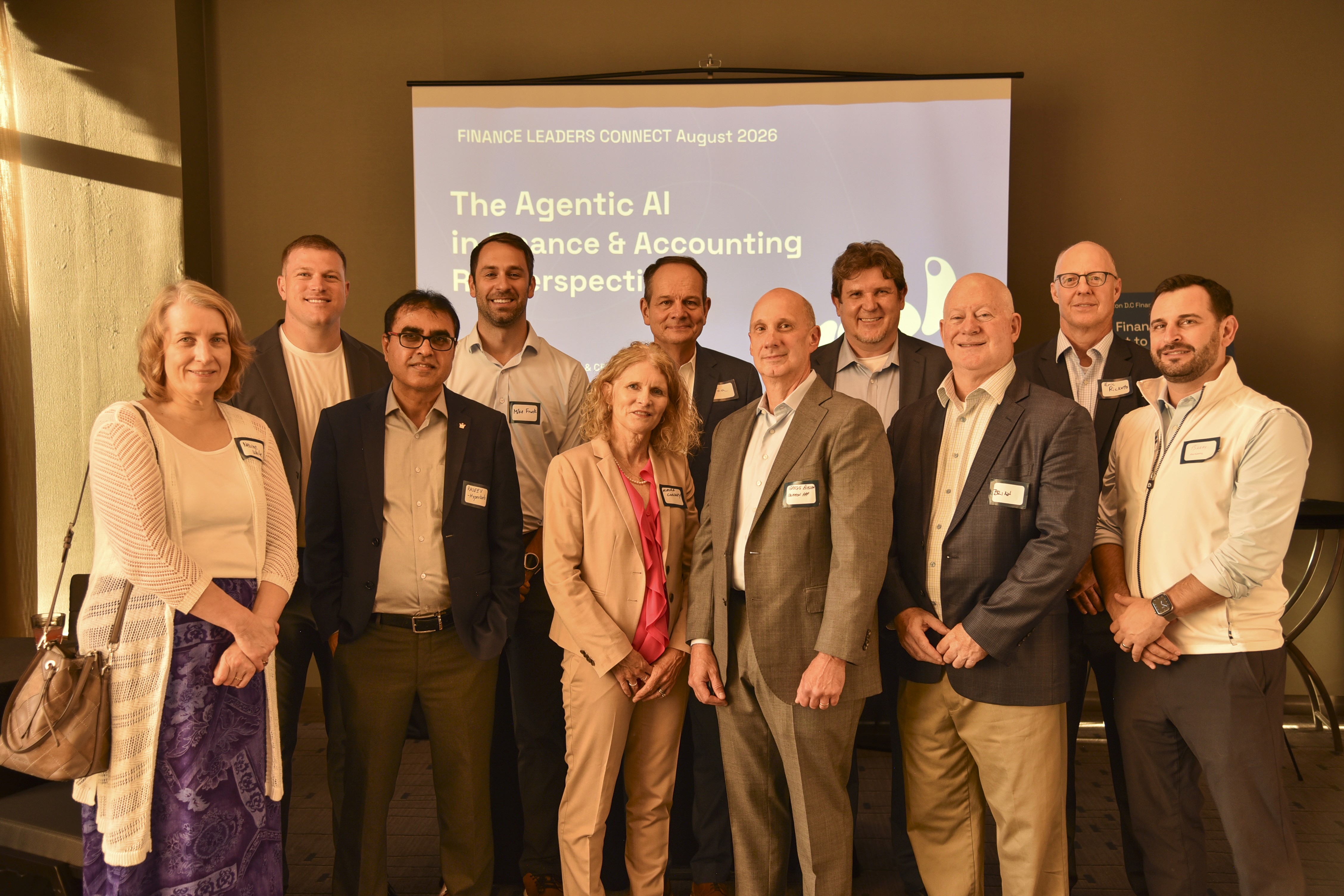
Over 20+ CFOs and senior finance leaders gathered at the Hyatt Regency Tysons Corner Center for an evening built around one question: how does AI move finance from insight to autonomous action? The gathering was hosted by Hyperbots Inc., and was led by Brian Kalish, Principal and Founder of Kalish Consulting Inc., and Rajeev Pathak, CEO & Co-Founder of Hyperbots Inc. And as with every Finance Leaders Connect event, the real substance came from the room: the questions, the pushback, and the challenges finance leaders shared from their respective organizations.
AI Reality: Problem First, Technology Second
Brian Kalish opened the evening with a strong reality check. Global AI spending is projected to hit $300 billion in 2025, nearly double what it was in 2023. But the returns haven't kept pace: average enterprise ROI on AI projects sits at 15–20%, well short of the 40–50% many organizations expected going in.
That gap isn't a reason to slow down, Brian argued; it's a reason to get disciplined. The finance leaders who win with AI won't be the ones who move fastest; they'll be the ones who start with real, costly problems, apply judgment about where decisions genuinely need a human in the loop, and only bring in technology where it actually fits. He framed this as a Product-Solution Fit test for AI tools: before adopting anything, ask what problem it solves, who the "customer" is inside the organization, and what value it actually creates, like time saved, errors avoided, capacity unlocked.
He also introduced a simple mental model for evaluating any workflow for AI readiness, what he calls the A.N.D. Principle:
Automation Ends Here: Where AI drafts and executes, but a human validates assumptions and signs off, so nothing runs unchecked.
Net New: Where AI can create new capabilities that didn't exist before, like running fifteen forecast scenarios in the time it used to take to run one per week.
Decision Support: Where AI flags anomalies or outliers, but the human makes the final call and owns the outcome.
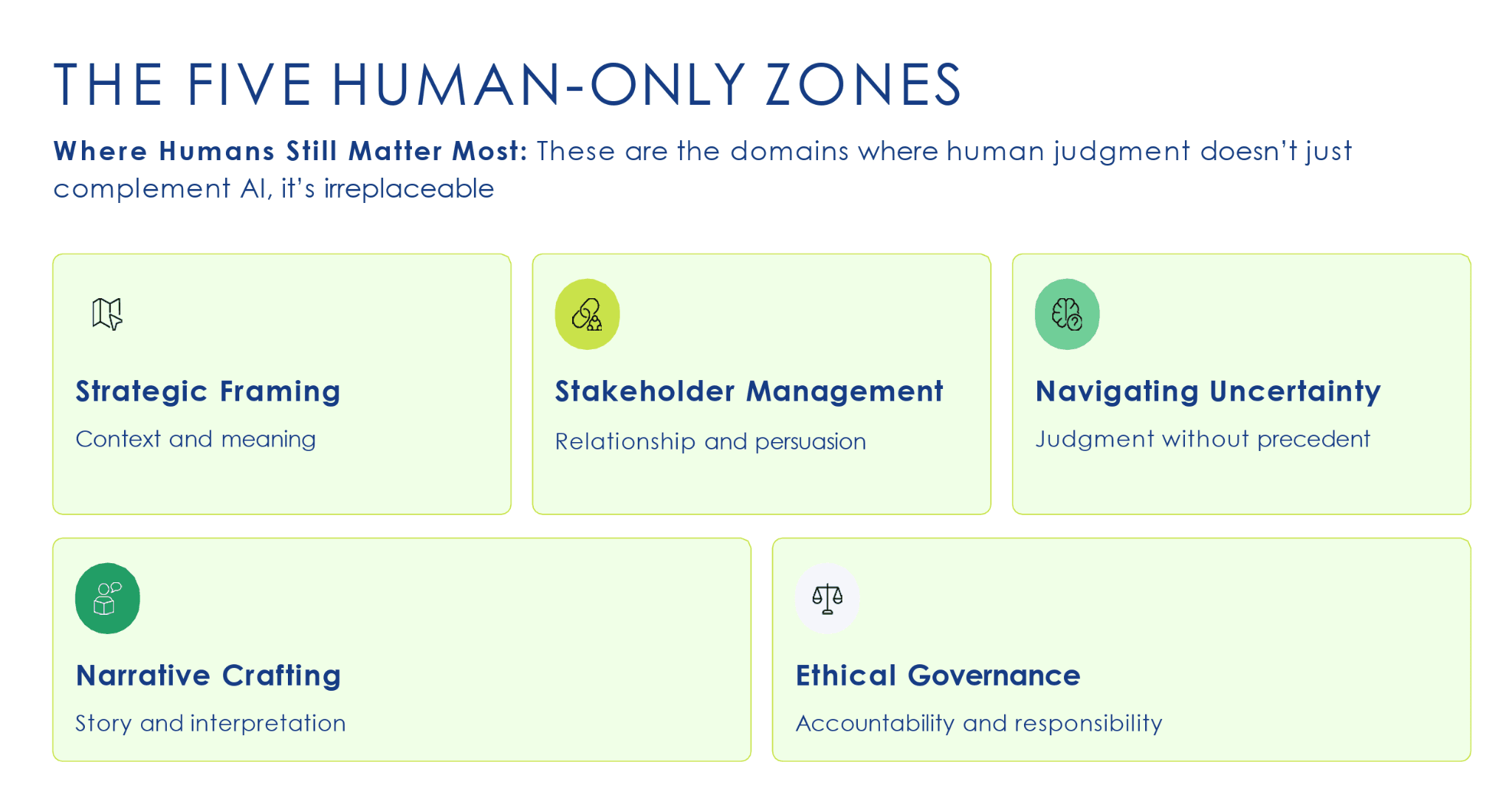
The throughline of Brian's session: finance's job isn't disappearing; it's concentrating. He walked through five zones he considers irreplaceable by AI: strategic framing, stakeholder management, navigating uncertainty, narrative crafting, and ethical governance, and argued that as AI absorbs the transactional and analytical layers, finance professionals should expect their time to shift dramatically: roughly 10% on reporting, 30% on analysis, and 60% on strategy, compared to the reporting-heavy split of a decade ago. "People with AI skills will replace those who don't develop them," he told the room, not AI itself replacing people.
Stress-Testing the Framework Against Blockchain
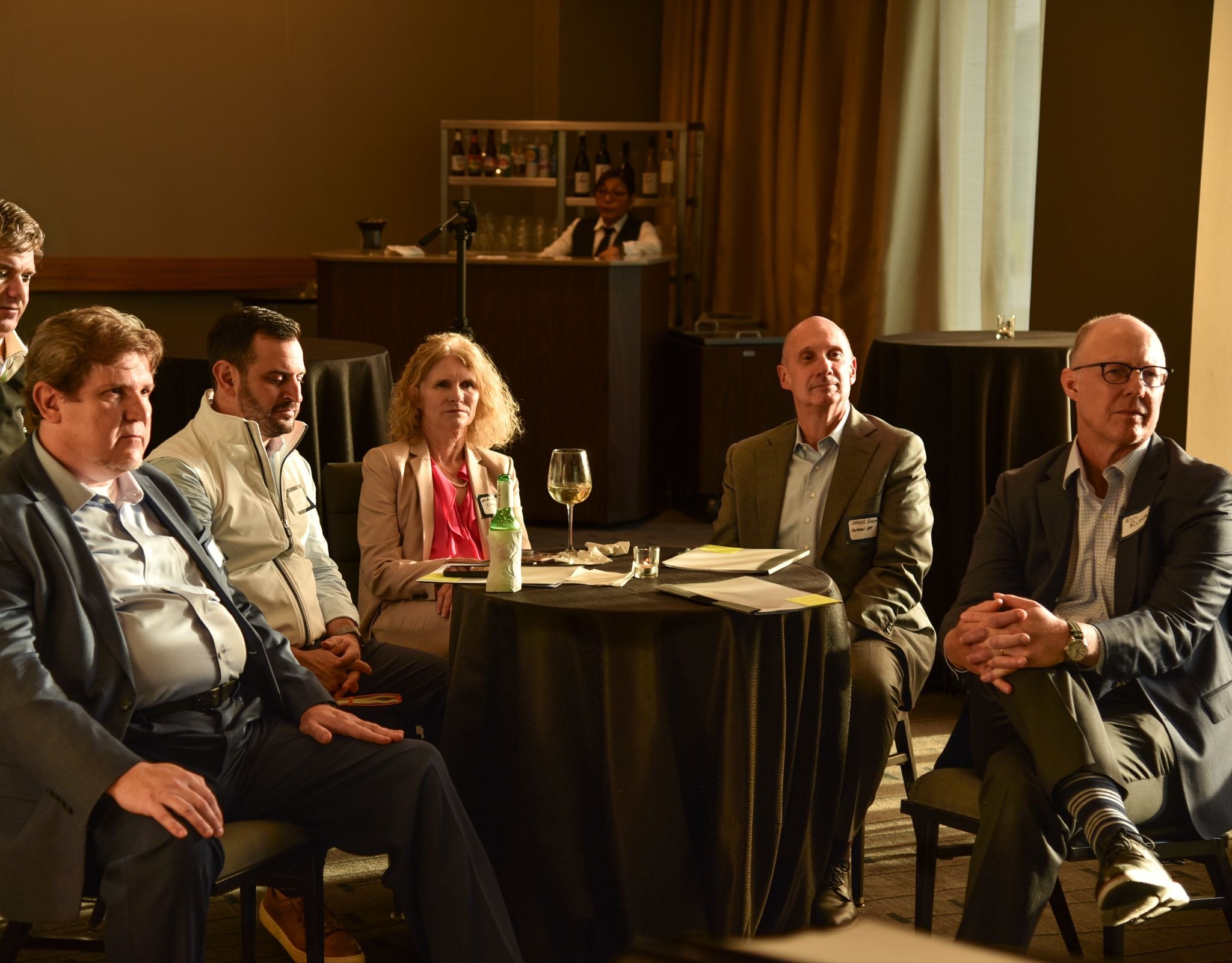
Brian's A.N.D. Principle turned out to be exactly the lens the room needed for one of the evening's sharpest exchanges. Bruce L., Head of FP&A at VelaFi, pushed the discussion into territory the slides hadn't explicitly covered: what is the complexity of deploying agentic AI in blockchain environments?
Bruce's point made sense. Because, thinking of it, most off-the-shelf agentic tools are built assuming a conventional general ledger and a conventional audit trail, assumptions that break down fast in decentralized finance operations. The group worked through it together and landed on a practical conclusion: rather than stitching together several pre-built, single-purpose agents and hoping the handoffs hold up, blockchain-heavy finance functions are usually better served by a custom orchestration layer, one designed from the ground up around the unique data structures, settlement logic, and compliance realities of that industry.
It was a useful reminder that the ‘Product-Solution Fit’ isn't simply about choosing the right AI tool. Sometimes, it means recognizing that a standard approach needs to be adapted or rebuilt for the environment in which it will operate.
Horizontal AI Platforms vs. Domain-Specific AI: Choosing Between Scale & Depth
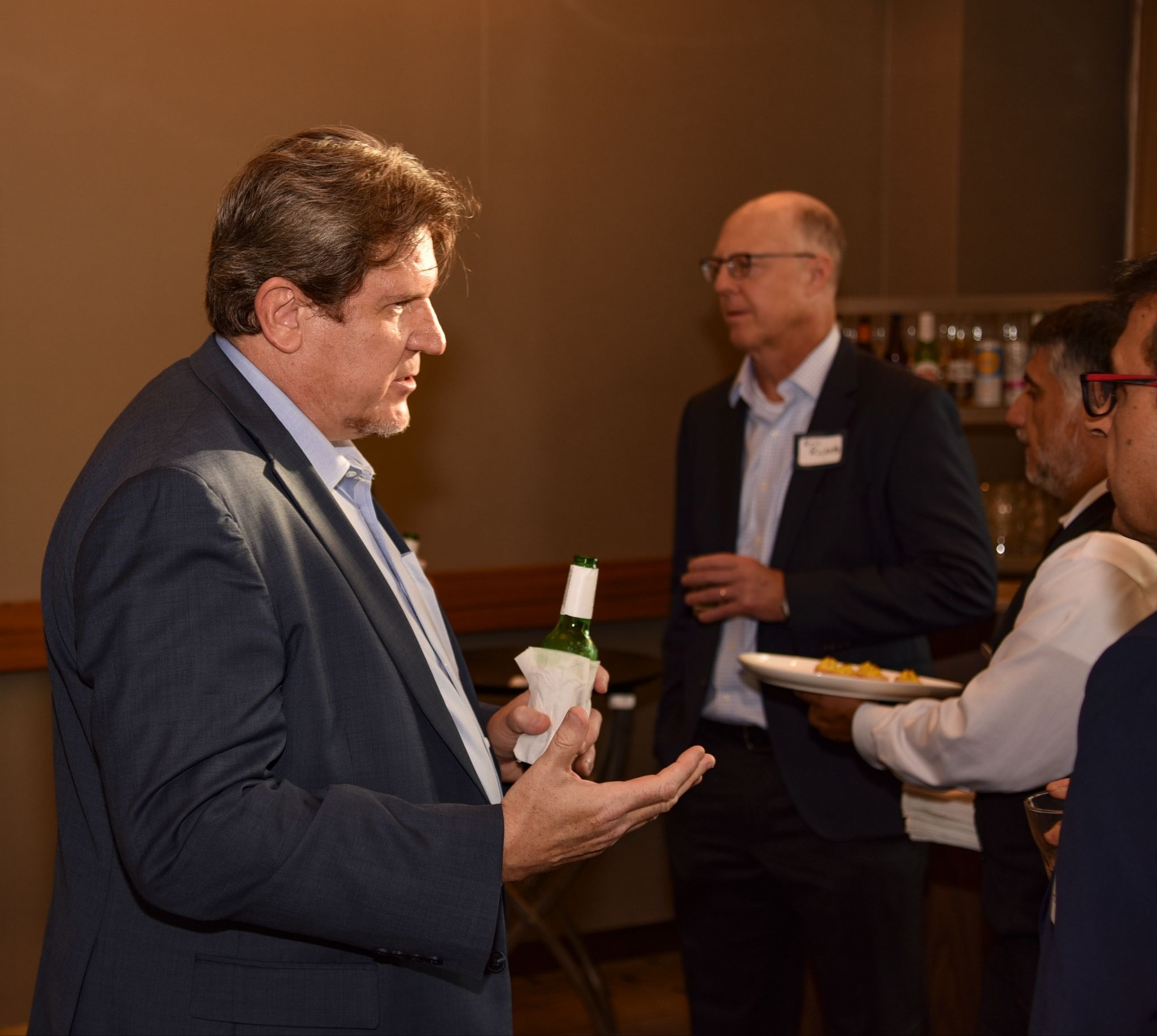
The conversation then widened from a specific industry challenge to a broader enterprise-architecture question. Ivan Blinov, Enterprise Business Transformation Architect at the Metropolitan Washington Airports Authority, raised the familiar tension between horizontal and specialized AI.
A horizontal platform is easier to roll out across many departments and easier for IT to standardize on, but it tends to trade away the depth needed for any single function to actually trust its output. Vertical, purpose-built AI trained specifically on finance data, finance workflows, and finance edge cases gives up some of that cross-functional flexibility in exchange for the accuracy and domain fluency that high-stakes decisions demand.
Rajeev connected this directly to Hyperbots' ROI research. High-volume, specialized functions such as Procure-to-Pay, Order-to-Cash, and Expense Management can be strong starting points for vertical AI because the workflows are repetitive, measurable, and closely tied to financial outcomes. More judgment-heavy functions such as FP&A can follow as organizations build greater trust, data maturity, and experience with AI. Ivan's framing gave the room a useful mental shortcut: the more specialized and high-stakes the workflow, the more important domain-specific AI becomes.
Building Trust in Agentic AI: The Question Every Finance Leader Must Confront
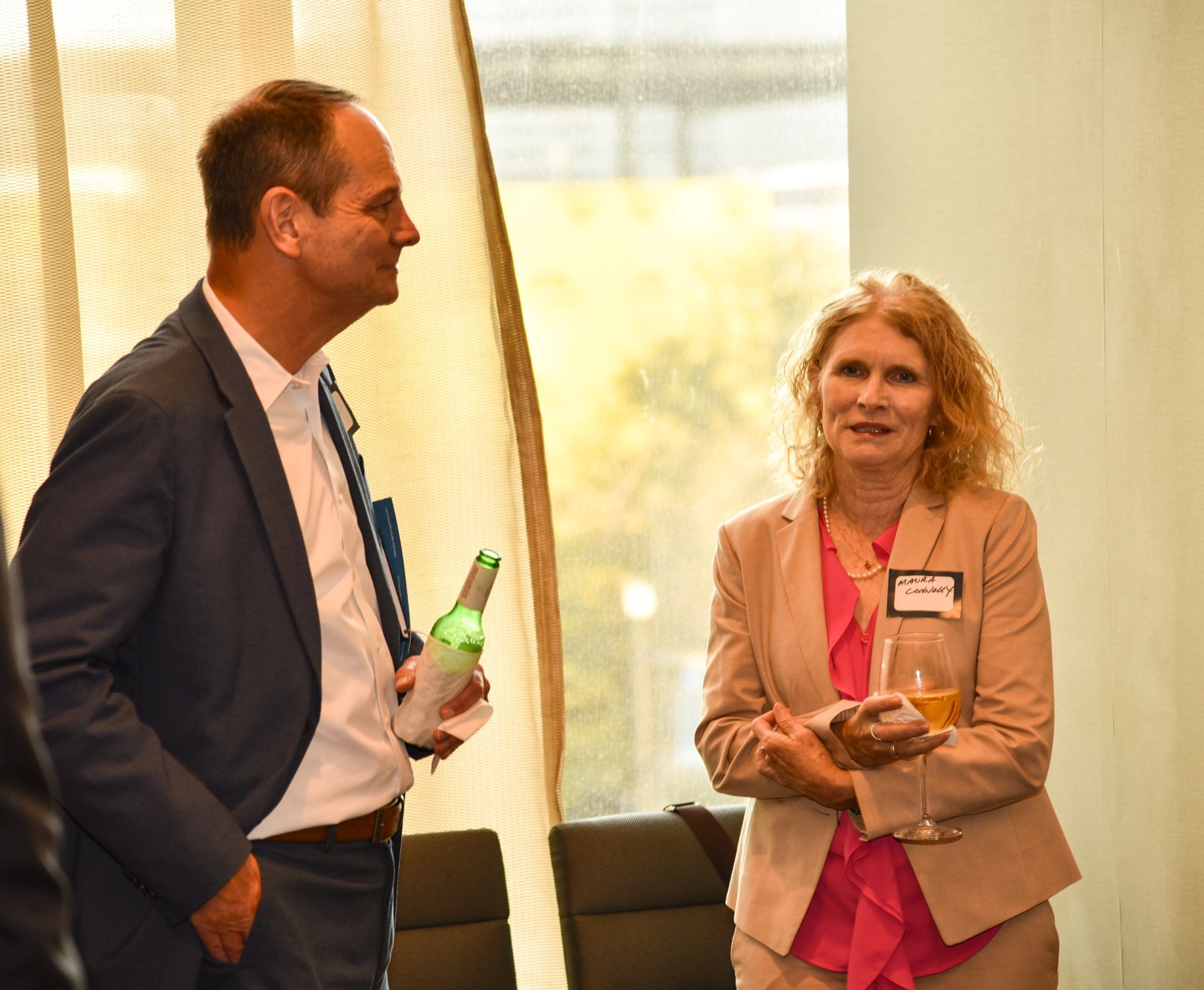
If Product-Solution Fit determines where AI should be used, another question determines how far organizations are willing to let it go: Can finance leaders trust AI with real authority? Maura L., Senior Finance Executive at Serco, put that question directly to the room: How do you build enough trust in AI to give it meaningful authority over financial processes?
The discussion that followed didn't land on a single formula, and that itself was the insight. Trust, the room agreed, isn't a fixed threshold; it's shaped heavily by the leadership style of whoever oversees the function. Some finance leaders will want to watch an agent closely for months, reviewing every output before granting more independence; others are comfortable granting broader autonomy from day one and course-correcting as needed.
Neither approach is inherently right or wrong. What both approaches share, though, is a dependency on the same three underlying variables: how accurate the AI actually is, how rigorously it's been trained, and how well it understands the specific business context: the chart of accounts, the vendor relationships, the edge cases, from the very first day it's deployed. Maura's question effectively brought the first half of the evening full circle: the frameworks, roadmaps, and ROI calculations only matter if the AI has earned the right to be trusted.
Special thanks to Barry Hartzberg, Eric Ricketts, Michael Frank, Gregg Bielen, Kenneth Kabuye, and Tom Steffens for adding to a discussion that ran well past the formal agenda.
Translating AI Potential into Measurable Finance ROI Use Cases
With the conversation grounded in the human side of AI adoption like judgment, trust, context, and accountability, Rajeev Pathak brought the discussion back to a practical question: Where should finance leaders actually start?
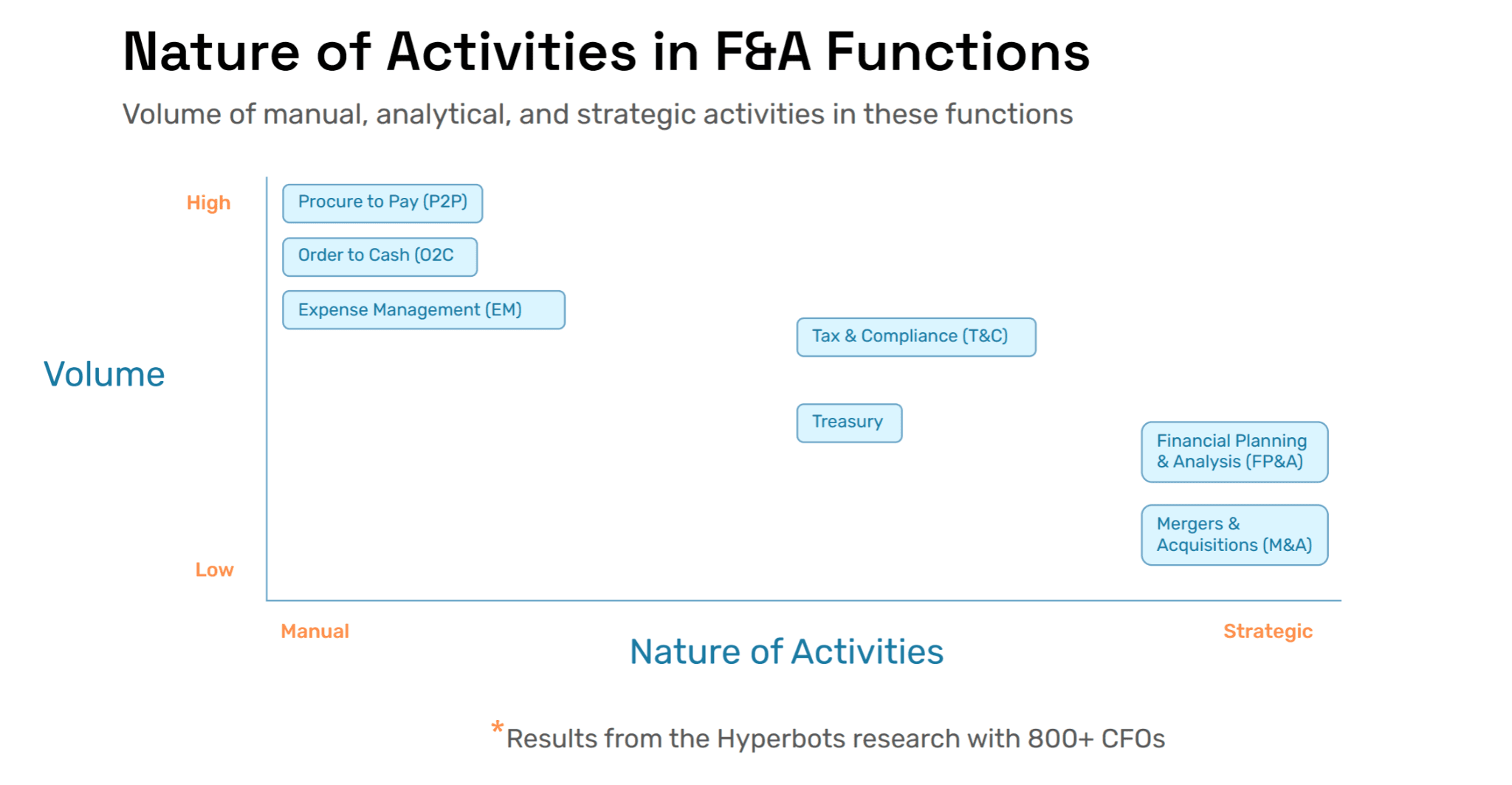
Rajeev grounded his answer in data from Hyperbots' ongoing CFO roundtable research: more than 30 sessions across major U.S. cities over the past 18 months, engaging more than 800 CFOs nationwide.
Rajeev's framing was practical rather than aspirational: start where volume is highest and the workflows are most manual: Procure-to-Pay, Order-to-Cash, and Expense Management, where straight-through processing rates of 80%+ on invoices and 95%+ on cash application are already achievable today. From there, scale into medium-term territory like tax & compliance and treasury, and eventually into the strategic, lower-volume, higher-complexity functions: FP&A and M&A, where AI shifts from execution to scenario modeling, forecasting, and risk identification.
The financial impact data backs up that sequencing: P2P, O2C, and Expense Management show the highest combination of volume and manual effort, and correspondingly the highest near-term financial impact, while FP&A and M&A carry lower volume but higher strategic weight, better suited for a phase-two rollout. His bottom line for the room echoed Brian's: not every AI use case delivers positive ROI, so the discipline is to start tactical, scale strategic, and let measured returns guide the roadmap, not hype. Across P2P and O2C specifically, Hyperbots' own data points to 70–80% time savings, 99%+ accuracy, and 10%+ cash-flow gains when F&A-specific models are applied instead of generic automation.
He also connected the ROI conversation to a bigger picture: roughly 1.1 billion people work as digital knowledge workers globally, representing enormous headroom for Agentic AI to elevate their output, while another 2 billion work in physical roles like agriculture, construction, plumbing, and electrical work, which open the door to physical AI and robotics down the line. Finance, he noted, is simply an early and obvious proving ground.
The Takeaway
Different backgrounds. Different industries. Different questions. Yet one common thread ran through the entire evening: AI is reshaping how finance work gets done, but successful adoption is ultimately a leadership discipline. Start with the costly, high-volume problems. Choose technology based on the problem, not the other way around. Build human checkpoints where judgment still matters. Earn trust before expanding autonomy. And measure the impact at every stage.
The opportunity isn't to remove humans from finance. It's to move finance professionals higher up the value chain, away from repetitive execution and toward strategy, judgment, influence, and decision-making. That's what the journey from insight to autonomous action really looks like.
A sincere thank you to every CFO and finance leader who joined us in Tysons Corner Center and contributed to such an open and candid conversation. These discussions are what make finance networking events more than an event; they are a forum for finance leaders to challenge assumptions, share what is actually working, and learn from one another.
The conversation doesn't stop in Washington D.C. Follow Hyperbots on LinkedIn to stay connected to the latest conversations, insights, and Finance Leaders Connect updates. And if you'd like to join the next discussion, visit our events page to explore upcoming finance events and reserve your spot.
We look forward to continuing the conversation and bringing it to more finance leaders across the country.


