Hyperbots at BlueCherry INSIGHT 2026: Connecting Finance, AI and Fashion
Two Days of AI, Innovation, and Industry Perspectives
The fashion and lifestyle industries are navigating a period of significant technological change. As businesses explore artificial intelligence, connected supply chains, and modular SaaS solutions, the conversation is increasingly shifting from what AI can do to how it can deliver measurable value within existing business operations.
These themes took center stage at the BlueCherry by CGS INSIGHT 2026, held on October 19–20, 2026, at the People Inc. Event Center in New York City. The event brought together the BlueCherry community across fashion, apparel, footwear, and lifestyle brands for two days of discussions on AI adoption, enterprise modernization, customer initiatives, and the future of the industry.
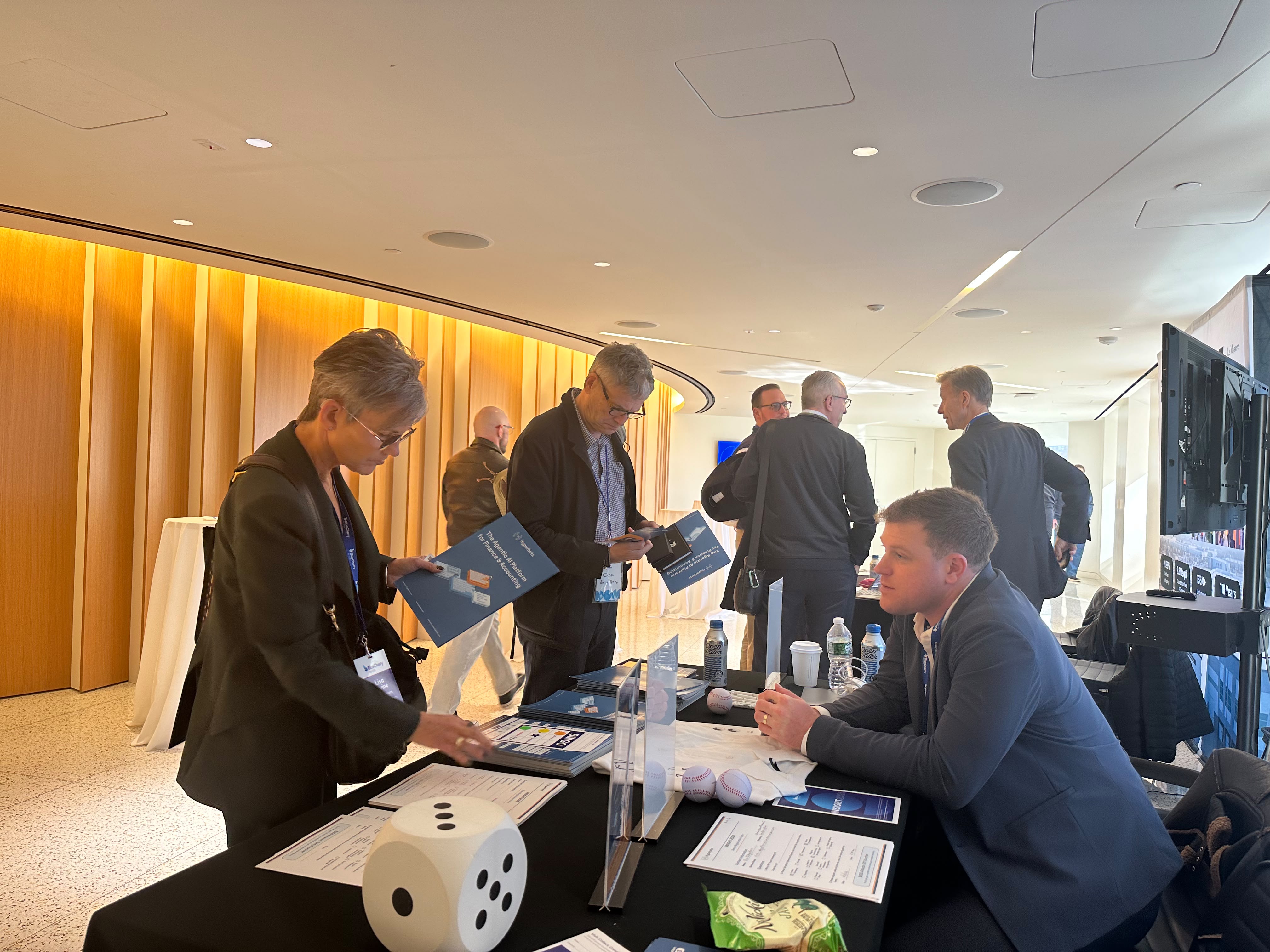
Hyperbots Inc. participated as a Gold Sponsor, engaging with attendees at Station #3 in the Sponsor Area. Across the event, conversations centered on the practical applications of AI, the importance of connecting new technologies with existing enterprise systems, and the need for automation that remains governed, auditable, and accountable.
The event also provided an opportunity to explore how finance automation fits into the broader technology ecosystem supporting fashion and supply chain operations. With finance teams relying on interconnected systems for purchasing, inventory, invoicing, payments, and reporting, intelligent automation must work alongside established workflows rather than require businesses to rebuild them.
For Hyperbots, these discussions aligned closely with its approach to AI-powered Finance and Accounting (F&A): connecting enterprise data, automating complex workflows, and making financial insights more accessible while keeping appropriate human oversight in place.
Day 1: From AI Ambition to Real-World Implementation

The first day of INSIGHT 2026 centered on the theme “AI Everywhere: From Strategy to Governed Action.” The sessions explored how businesses can move beyond AI experimentation and establish a practical foundation for adoption across real customer initiatives and day-to-day operations.
Rather than treating AI as a standalone technology, the discussions examined how it can become part of existing business processes, support decision-making, and help teams respond to operational exceptions.
Building a Practical Foundation for AI Adoption
One of the central themes of Day 1 was the need to translate AI strategies into tangible business outcomes and applications. For fashion and lifestyle businesses, this means identifying where AI can support existing operations, improve access to information, and help teams make better-informed decisions.
The sessions explored the journey from establishing a foundation for AI adoption to incorporating intelligence into customer-facing and operational initiatives. This progression highlights an important consideration for enterprise technology leaders: successful AI adoption requires more than selecting a capable model. It also depends on how the technology connects to business data, fits into established workflows, and supports the people responsible for making decisions.
For organizations managing interconnected supply chain and finance processes, this foundation is particularly important. Purchasing, receiving, inventory, invoicing, and financial reporting depend on information flowing across systems. AI becomes more useful when it can work with that information in context and help teams act on it.
Permission-Aware Data Access and Identifying Exceptions
Another important discussion focused on permission-aware data access and agents that monitor exceptions and recommend next steps. Enterprise AI systems often need to work with information distributed across multiple applications and departments. However, access to that information must respect the permissions and responsibilities established within the organization. Permission-aware access helps ensure that AI interactions remain aligned with the user's authorized access to business information.
The sessions also explored agents that can identify exceptions, surface relevant information, and recommend actions. These capabilities can help teams move from manually searching for issues to receiving more targeted information about where attention may be needed.
For example, in a connected business environment, an exception in a purchasing or fulfillment process may require information from multiple operational systems. Intelligent agents can help surface relevant discrepancies and suggest next steps, allowing teams to investigate issues more efficiently.
The broader takeaway was that AI adoption must account for both capability and control. Organizations need systems that can contribute to business processes while maintaining appropriate access boundaries, visibility, and accountability.
Embedded AI Chat for Operational Questions
The discussions also covered embedded AI chat, including the ability to ask questions about demand, margins, suppliers, and fulfillment. This approach offers an alternative to navigating multiple reports or manually consolidating information from different systems. Instead, users can ask questions in natural language and access relevant information through a conversational interface.
For business teams, the value of this capability depends on the quality and context of the underlying data. Questions about supplier performance, product margins, demand patterns, or fulfillment require information from the appropriate business systems to generate useful answers. Embedding AI into existing workflows can make information easier to access without requiring every user to become an expert in the underlying applications or reporting tools.
For finance leaders, the same principle applies to financial data. Questions about spending, invoice exceptions, cash flow, and revenue performance can be easier to investigate when AI can reason across relevant enterprise records and reports.
Human-in-the-Loop AI: Balancing Automation with Accountability
Day 1 concluded with a live build of a human-in-the-loop agent, demonstrating where automation can assist and where human approval belongs. This discussion reinforced a key consideration for enterprise AI: not every action should be treated in the same way. While repetitive tasks and information processing can often be automated, decisions with significant financial or operational consequences may require review, approval, or intervention by a responsible person.
A human-in-the-loop approach helps organizations define the boundaries between automated execution and human judgment. AI can identify an issue, gather relevant information, recommend a response, or prepare an action for review, while people retain oversight where it matters. This is particularly relevant to finance and accounting workflows, where approvals, auditability, and exception handling are essential.
Together, the Day 1 sessions highlighted a practical direction for enterprise AI: integrate intelligence into existing workflows, make information easier to access, and establish clear boundaries for automated actions and human intervention.
Day 2: Industry Perspectives and the Future of Fashion

The second day shifted the focus toward industry experiences, BlueCherry's future direction, and broader questions about where the fashion industry is headed. The morning sessions brought forward perspectives from the front lines and offered a look at what is next for BlueCherry, while a town hall discussion opened up later focused on the future of the industry.
These conversations complemented the previous day's focus on AI adoption by broadening the discussion to the business environment in which technology decisions are made. Modernization is not simply about introducing new tools. It also involves understanding evolving business requirements, connecting systems, and identifying the capabilities organizations need to remain responsive to change.
Exploring What's Next for BlueCherry
The morning also included a look at what is next for BlueCherry, keeping the focus on the evolution of enterprise technology for the fashion industry. For organizations operating across purchasing, inventory, procurement management, fulfillment, and finance, connected systems play an important role in maintaining visibility across business operations.
As companies consider new AI capabilities, the ability to work with their existing technology environment becomes an important part of the discussion. This is where integration and inter-operability matter. Businesses need ways to introduce new capabilities without unnecessarily disrupting established systems or creating additional complexity for the teams that depend on them.
The conversations at INSIGHT 2026 reinforced the relevance of connecting AI initiatives with the enterprise platforms already supporting day-to-day operations.
A Town Hall on the Future of Fashion
The afternoon town hall brought attendees together to discuss where the fashion industry is headed. As fashion, apparel, footwear, and lifestyle brands continue to evaluate technology investments, the relationship between operational efficiency, connected supply chains, and digital transformation remains an important consideration.
The event's focus on AI and modernization provided a setting for these wider industry discussions. It also highlighted why technology providers must consider the needs of the broader business ecosystem rather than focus on individual tools in isolation.
For finance and operations teams, the implications are clear: the systems supporting business processes need to exchange information effectively, provide useful visibility, and accommodate new capabilities as business requirements evolve.
Day 2 rounded out the event by connecting practical technology discussions with the larger questions facing the industry, from modernization priorities to the future role of AI.
At Station #3: Connecting with the BlueCherry Community

Beyond the conference sessions, INSIGHT 2026 created opportunities for the Hyperbots team to connect directly with members of the BlueCherry community.
As a Gold Sponsor, Hyperbots welcomed attendees at Station #3 in the Sponsor Area throughout the two-day event. The booth provided a space to introduce Hyperbots' approach to AI-powered finance automation, discuss how it can work with BlueCherry, and exchange perspectives on the role of intelligent agents across enterprise workflows.
Conversations Around Connected Finance Automation
A recurring focus of the booth conversations was the importance of making AI work with the systems businesses already use. Fashion and lifestyle businesses depend on interconnected workflows that span vendors, purchasing, receiving, inventory, invoicing, order management, and financial reporting.
Finance teams operate within this wider environment, relying on information from operational systems to process transactions, reconcile records, investigate discrepancies, and maintain accurate financial data.
Hyperbots' approach focuses on connecting AI-powered finance workflows with existing enterprise systems. This enables organizations to explore automation without treating their current technology environment as something that must first be replaced. The discussions at Station #3 provided an opportunity to explain how integrations, AI agents, and access to financial insights can work together to support more connected operations.
Roll the Dice: Bringing Energy to the Sponsor Area
Attendees were invited to participate in the Roll the Dice game for a chance to win goodies, adding a fun and engaging activity to the Sponsor Area. The game created another opportunity for visitors to stop by, meet the Hyperbots team, and learn more about AI-powered finance automation.
Alongside the booth activities, networking breaks and the evening reception helped keep conversations going beyond the scheduled sessions. These interactions added to the event experience and created opportunities to exchange ideas with people working across the BlueCherry ecosystem.
A Shared Interest in Practical, Governed AI
Across the conversations at Station #3, one theme stood out: organizations are looking for AI that is governed, auditable, and capable of keeping people involved where their judgment and approval are needed.
This is an important distinction as businesses move from exploring AI to incorporating it into operational processes. Intelligent automation must do more than perform individual tasks. It needs to work within business rules, connect to relevant information, support exception management, and provide appropriate oversight.
For Hyperbots, this aligns with the design of Hyper Agents for Finance and Accounting, which are built to support finance workflows through connected data, task automation, and controlled execution.
Connecting AI-Powered Finance with the BlueCherry Ecosystem
A key part of Hyperbots' participation at INSIGHT 2026 was demonstrating the relevance of finance automation within an existing BlueCherry environment. Finance and operations do not function as isolated departments.
Purchasing decisions affect supplier invoices, receiving records support verification, inventory movements influence operational costs, and sales transactions flow into invoicing and accounts receivable. Financial reporting depends on information generated throughout these interconnected processes. Automating finance effectively therefore requires access to the business information that supports each workflow.
Hyperbots connects with BlueCherry modules used across finance and operations, including Vendor Master, Purchasing, Receiving, Inventory, AP Invoice/Voucher, Costing, GL, Customer Master, Sales Orders, Shipping, Invoicing, AR, Credit, EDI, and Returns.
This broad integration scope supports a connected approach to automation, allowing AI agents to work with information from relevant business processes rather than operate as disconnected applications.
Pre-Built Connectors for Existing Enterprise Workflows
Hyperbots' pre-built connectors are designed to support bidirectional API synchronization, automatic error recovery, and native interaction with BlueCherry stored procedures.
These capabilities are important when introducing automation into established enterprise environments. Integrations must support the exchange of information between systems while accounting for the existing processes on which business teams depend.
Bidirectional synchronization supports the movement of information between connected applications, while automatic error recovery helps address integration interruptions. Native interaction with BlueCherry stored procedures further supports working within the platform's existing technical environment.
The objective is to reduce the need for extensive rebuilding before introducing finance automation. For businesses evaluating AI adoption, this integration-first approach can make it easier to explore how intelligent agents fit into current operations while preserving the role of existing enterprise systems.
Supporting Procure-to-Pay, Order-to-Cash, and Financial Close
With the underlying integrations in place, Hyperbots' ready-to-deploy AI agents support three important areas of finance operations: Procure-to-Pay, Order-to-Cash, and Financial Close.
Procure-to-Pay (P2P) covers the processes associated with purchasing goods or services and completing supplier payments. It involves connected activities such as purchasing, receiving, invoice processing, verification, and payment-related workflows. AI-powered automation can help streamline relevant tasks and support the handling of exceptions across these activities.
Order-to-Cash (O2C) spans the processes involved in fulfilling customer orders and collecting payment. These workflows can involve sales orders, shipping, invoicing, accounts receivable, and credit-related activities. Connecting the relevant information helps support visibility across the order and collection lifecycle.
Financial Close brings together the activities required to prepare and review financial records for a reporting period. Access to connected financial and operational data can help teams investigate discrepancies, review information, and support close-related workflows.
Together, these areas illustrate how AI-powered finance automation can extend beyond isolated tasks to support broader business processes. Rather than requiring finance teams to work across disconnected automation tools, a connected approach brings the underlying systems and workflow requirements into the same operating environment.
Extending Automation with 200+ Pre-Built APIs
Not every organization has identical finance and supply chain requirements. Business processes, approval structures, reporting needs, and system configurations can vary considerably across companies.
To support these differences, Hyperbots offers more than 200 pre-built APIs that can be used to build custom agents for specific finance and supply chain needs.
These APIs provide building blocks for organizations looking to extend automation beyond ready-to-deploy workflows. Depending on their requirements, businesses can explore custom agents designed around particular processes, integrations, or use cases.
This flexibility is especially relevant to organizations with specialized workflows that cannot be addressed through a single standardized automation model. By combining pre-built capabilities with options for customization, Hyperbots supports an approach to finance automation that can accommodate both established processes and evolving business requirements.
Beyond Automation: Turning Finance Data into Actionable Insights
Automating transactional workflows is only one part of finance transformation. Finance teams also need timely access to information that helps them understand performance, investigate variances, anticipate changes, and communicate insights to business leaders.
Hyperbots' private Finance and Accounting Chatbot addresses this need by enabling users to interact with financial information through natural-language questions. The chatbot can work across ERP data, spreadsheets, and reports to support access to financial insights without requiring users to manually consolidate information from multiple sources for every query.
Natural-Language Access to Financial Information
Traditional financial analysis often involves navigating multiple reports, locating relevant records, consolidating data, and interpreting the results. Depending on the question, this process can require information from several systems or files.
A natural-language interface offers another way to approach these tasks. Users can ask questions in everyday language and seek relevant information from connected financial and business data.
For example, finance professionals may need to investigate a variance, understand a change in cash flow, review revenue performance, or prepare information for a management discussion. Access to relevant records and reports through a conversational interface can help simplify how they begin these analyses.
The usefulness of such an interface depends on the availability, quality, and context of the underlying data. Connecting ERP records, spreadsheets, and reports helps bring relevant information together for analysis.
Supporting Variance Analysis, Forecasting, and Reporting
Hyperbots' private F&A chatbot supports financial use cases that include real-time insight, variance analysis, cash flow and revenue forecasting, and board-ready reporting.
Variance analysis helps finance teams examine differences between expected and actual results. Cash flow and revenue forecasts support forward-looking planning, while reporting capabilities help teams communicate financial information to leadership.
Making these capabilities accessible through natural-language questions can offer finance professionals another way to explore data and prepare insights for business discussions.
For organizations working to modernize finance, this complements transactional automation. AI agents can help streamline operational processes, while conversational access to financial data supports analysis and decision-making.
What INSIGHT 2026 Reinforced About Enterprise AI
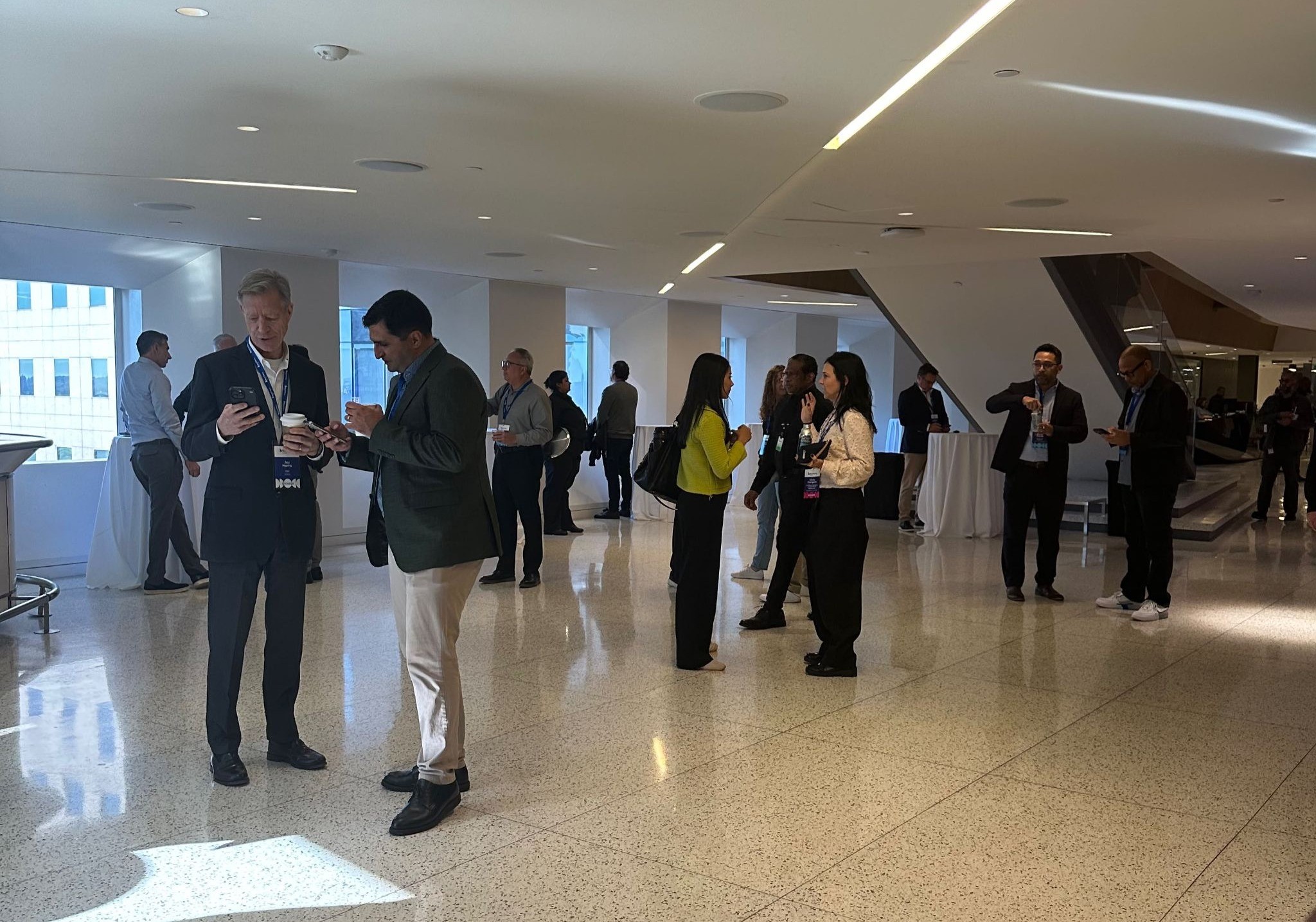
Across the sessions, industry discussions, and conversations at Station #3, several themes emerged around the practical adoption of enterprise AI.
1. AI Must Be Connected to Existing Business Systems
AI delivers greater practical value when it can work with the data and workflows that businesses already rely on. For finance and operations teams, this means connecting intelligence to enterprise applications rather than introducing disconnected tools that create additional work.
2. Governance and Human Oversight Remain Essential
The focus on governed AI and human-in-the-loop agents underscored the importance of accountability. Automation should operate within defined boundaries, with clear expectations for access, review, approval, and intervention.
3. AI Adoption Must Move Beyond Experimentation
The distinction between AI strategy and governed action reflects a wider challenge for enterprises: translating experimentation into capabilities that support real business processes. Practical implementation requires organizations to consider their data, existing systems, operational requirements, and the outcomes they want to achieve.
4. Intelligent Agents Can Support End-to-End Workflows
Rather than limiting automation to individual activities, organizations can explore how agents support connected processes across purchasing, fulfillment, invoicing, financial reporting, and other business functions.
The opportunity lies in coordinating these capabilities while maintaining appropriate controls and human involvement.
5. Financial Insights Matter Alongside Transactional Automation
Automating processes is only part of the picture. Finance teams also need information that helps them understand business performance, assess risks, and plan ahead. Connecting operational automation with financial analysis can help organizations approach finance transformation as a combination of execution, visibility, and decision support.
Taken together, these themes point toward an approach to enterprise AI that emphasizes integration, governance, and practical business value over technology adoption in isolation.
Continuing the Conversation on AI-Powered Finance
BlueCherry INSIGHT 2026 provided two days of valuable discussions, industry perspectives, and opportunities to connect with the fashion and lifestyle technology community.
We would like to extend our thanks to the BlueCherry by CGS team for organizing the event and bringing the community together around the future of fashion technology, connected operations, and AI adoption.
We are truly honored to have represented the company as a Gold Sponsor, engaging with attendees and sharing our approach to AI-powered finance automation throughout the event.
We are also grateful to everyone who visited Station #3, participated in our Roll the Dice activity, joined us during networking breaks, and took the time to discuss how AI agents can support finance and operations workflows.
The conversations throughout INSIGHT 2026 reinforced an important principle: enterprise AI needs to be connected to existing systems, governed by clear controls, and designed around the people and processes that keep businesses running.
At Hyperbots, we remain focused on helping organizations advance finance automation through intelligent agents, connected enterprise workflows, and accessible financial insights.
Follow Hyperbots on LinkedIn to stay connected to the latest conversations, insights, and event updates. And if you'd like to join our next discussion, visit our events page to explore upcoming finance events and reserve your spot.
We look forward to continuing the conversation and hosting more events for finance leaders across the country.

